You don’t need to know a single composer’s name to give your child the gift of classical music. You just need a way in — and a well-made cartoon can be exactly that.
The short version
Classical music gives children a wordless vocabulary for feelings. Cartoons that weave it into the story — rather than teaching it — let kids feel excitement, calm, wonder, and tenderness long before they have words for any of them.
Music is feelings before it’s facts
A toddler can’t define “longing,” but they can feel the ache in a slow cello line. They can’t explain “joy,” but they’ll bounce to Vivaldi without being asked. That’s the quiet superpower of instrumental music: it hands a child a whole range of emotions to try on, safely, with no explanation required.
The trick: don’t make it a lesson
The fastest way to make classical music feel like homework is to announce it. The better approach — and the one that actually sticks — is to let it arrive inside a story.
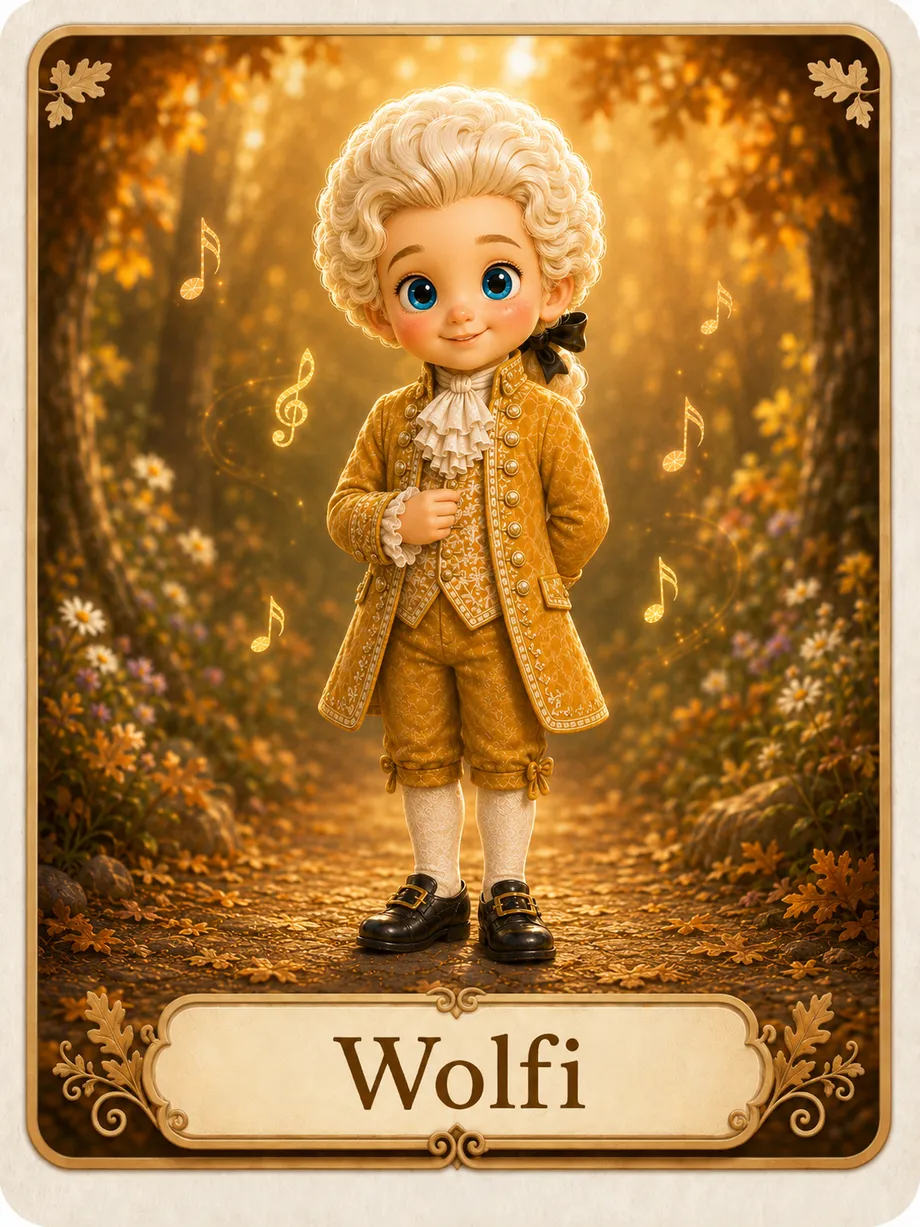
That’s the whole idea behind Wolfi in Sasha’s Golden Garden. Wolfi is the friend who hears music in everything — a dripping tap, the wind, the river. He never says “let’s listen to Mozart.” He says, “Do you hear that? The river sounds just like a cello!” — and the music rises naturally. Each episode features one real, public-domain classical piece chosen to match the mood of the story.
How to share it at home
- Pair it with calm activities. Put on a gentle piece during drawing, building, or snack time.
- Name the feeling, not the theory. “This one sounds sparkly and excited.” “This one feels like a hug.”
- Let bodies respond. Sway, tiptoe, conduct with a spoon, or flop down and rest.
- Keep first listens short. A two-minute calm piece beats a twenty-minute symphony.
- Follow the story. Watching a piece do something in a cartoon gives a child a reason to care about it.
A few gentle starters
Debussy’s Clair de Lune (calm and dreamy), Vivaldi’s Spring (bright and bouncy), and the slow, warm movements of Bach are friendly first listens. In the garden, Episode 1, “The Falling Leaf,” is built around Clair de Lune, and Episode 2, “The Lark,” around Vivaldi’s Spring.
Try it
Watch the show to hear how music can live inside a story, or download a free coloring pack to play a piece alongside. For calmer evenings, see our bedtime cartoons guide.
This article is general parenting information, not medical or developmental advice.